
The Binding of Scripture
The "passage" is the enemy of the scriptures.

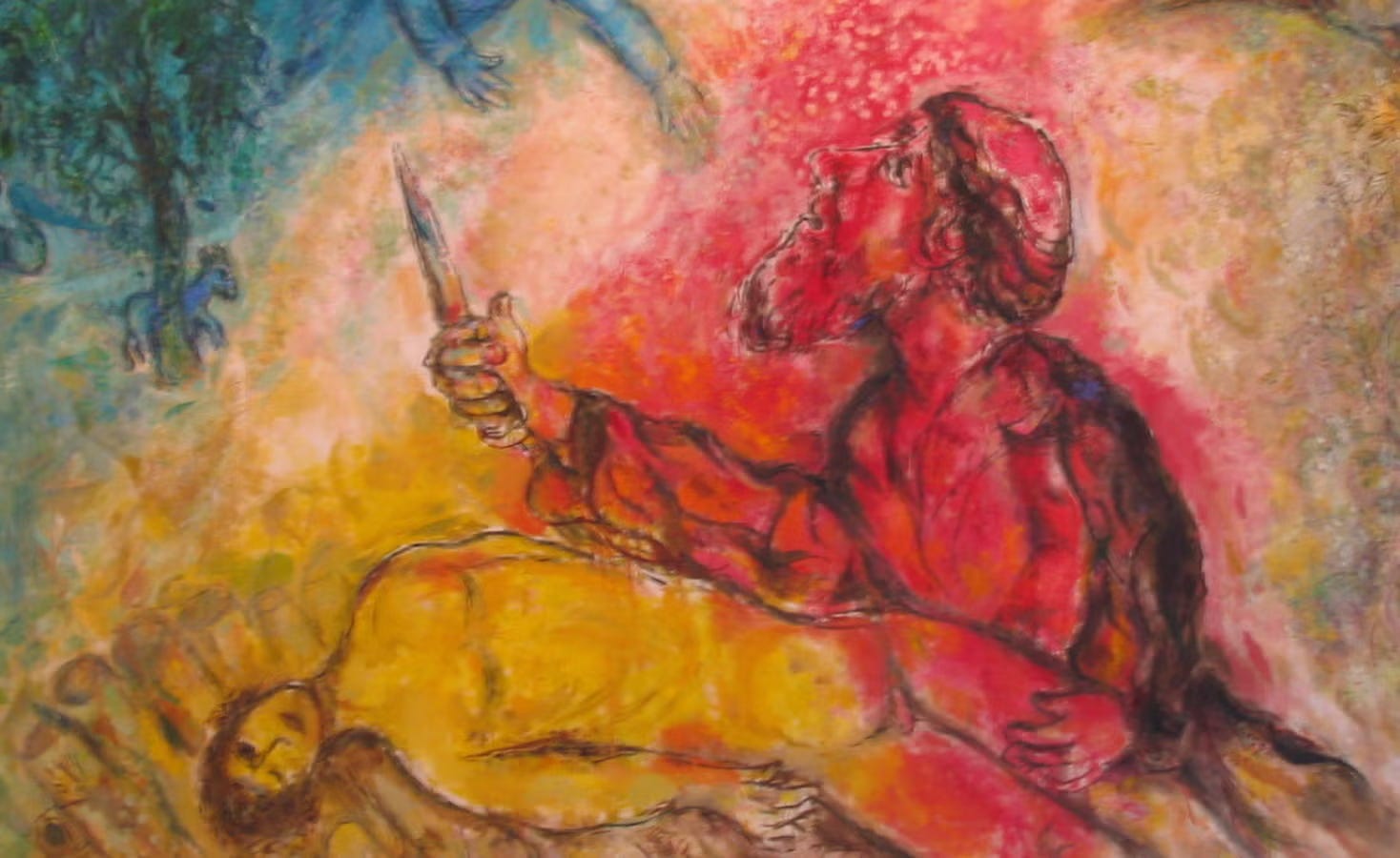
We mustn’t interpret the Akedah in such a way that ignores the fact that Isaac spent the rest of his life in his dead mother’s tent. Abraham’s son went up the mountain with his father never returned home with him.
Genesis 22.1-14
In his book Unleashing the Scriptures, Stanley Hauerwas recommends that the church undo the Reformation and take the Bible away from individual believers. He is not joking. The privatization of scriptural reading, he argues—every reader his own exegete, every individual her own canon within the canon— produces a Christianity that mirrors whatever its readers already believe and a God who ratifies whatever they already want. In typical fashion, Hauerwas’ prescription is drastic; nevertheless, the diagnosis is sound.
I want to propose something less drastic and, I suspect, more difficult. We do not need to take Bibles away from people. Instead we need to stop reading passages.
The damage is not that individuals read the scriptures.
The damage is that no one does.
The Old Testament lectionary passage for this Sunday is the Akedah— the Binding of Isaac, which means public proclaimers across the church will open their Bibles to Genesis 22 and read a discrete passage. This is not the same as reading the scriptures. To so read a passage is already a kind of binding— a tying off of the text from its body. Like a tourniquet applied to a limb until the circulation stops, such a binding of the text renders the live-giving scriptures numb.
More and more, I have become convinced— slowly, against my own professional habits— that the passage is the enemy of the scriptures.
